DHAGA 490 · proverbial saying
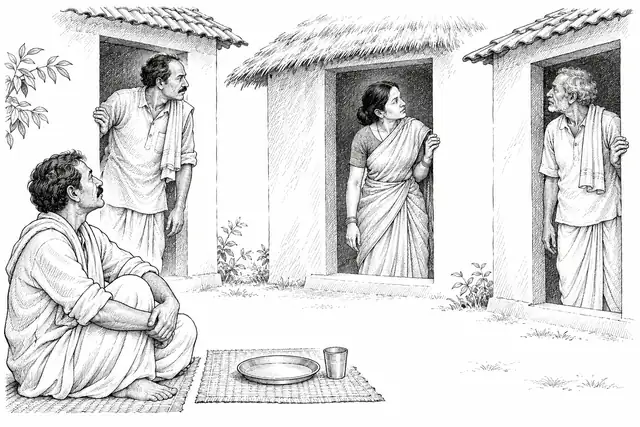
Three hosts, an unfed guest
ତିନି ଘର କୁଣିଆ ଓପାସ ରହେ।
ତିନି ଘରର କୁଣିଆ ହୋଇ ମଧ୍ୟ ଖାଇବାକୁ ନପାଇବାର ଚିତ୍ର ଏହା। ଆମ ବ୍ୟାଖ୍ୟାରେ, ଅନେକଙ୍କ ଉପରେ ଭରସା ରହିଲେ ମଧ୍ୟ କିଏ ନିର୍ଦ୍ଦିଷ୍ଟ ଭାବରେ କାମଟି କରିବ ତାହା ସ୍ପଷ୍ଟ ନହେଲେ ଦରକାରୀ କାମ ଅକରା ରହିଯାଇପାରେ। ଜଣେ ଅନ୍ୟଜଣଙ୍କ ଉପରେ ଛାଡ଼ିଦେବା ଏହାକୁ ବୁଝାଇବାର ଏକ ଉଦାହରଣ; କାରଣଟି ମୂଳ ଧାଡ଼ିରେ କୁହାଯାଇନାହିଁ।
Literal meaning
A guest of three households goes unfed.
What it means
Three households appear to offer more support than one, yet the guest still has no meal. Our editorial reading is that shared responsibility can fail when nobody clearly takes it on. The familiar scenario in which each host assumes another has provided food illustrates the saying; it is not narrated in the source.
When you might use it
Original imagined example: Three colleagues each assume someone else has arranged lunch for a visitor. When the visitor is left waiting, one of them recalls the guest of three households.
Cultural context
The contrast is numerical and practical: three households, but no meal. ଓପାସ is read here as remaining unfed, rather than undertaking a religious fast.