DHAGA 233 · proverbial saying
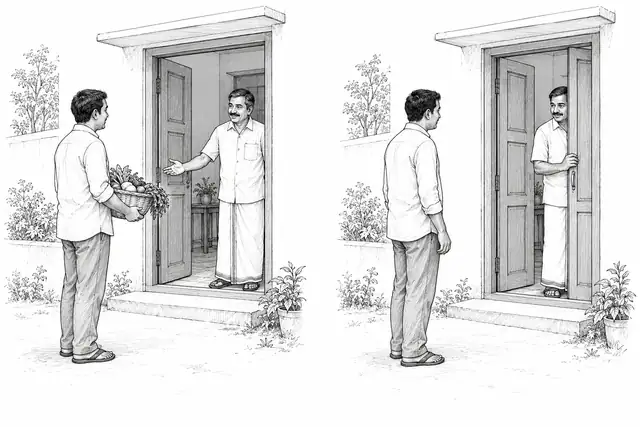
Giving, and closing the door
ଦିଆକୁ ଦିଆ, ଅଦିଆକୁ ଦୁଆର ଦିଆ
ପ୍ରଥମେ “ଦିଆ”ରେ ଦେବାର କଥା, ଶେଷରେ “ଦୁଆର ଦିଆ”ରେ ବାଟ ବନ୍ଦ କରିବାର କଥା ଆସୁଛି। ଯିଏ ଦିଏ ତାକୁ ଦିଅ, ଯିଏ ଦିଏନାହିଁ ତାହା ପାଇଁ ଦୁଆର ବନ୍ଦ—ଏହି ହିସାବଟି କଥାରେ ଧରାପଡ଼େ। ଆଦର ଓ ସାହାଯ୍ୟ ଯେତେବେଳେ କେବଳ ପ୍ରତିଦାନ ଉପରେ ନିର୍ଭର କରେ, ଆମ ପଢ଼ାରେ ତାହାର ସଂକୀର୍ଣ୍ଣତା ମଧ୍ୟ ଦିଶେ। ଏହାକୁ ସମର୍ଥନ କରି କୁହାଗଲା କି କଟାକ୍ଷରେ, ଅଭିଧାନର ଛୋଟ ଉଦାହରଣ ସେ ପ୍ରସଙ୍ଗ ଦିଏନାହିଁ।
Literal meaning
Give to the giver; close the door to the non-giver.
What it means
The repeated sound of “ଦିଆ” changes its force at the door: giving becomes shutting someone out. Read as a compact rule of reciprocity, the line divides people according to whether they give. It can expose the calculating side of an exchange in which welcome depends on a return. Our reading leaves room for a speaker to endorse that bargain or mock it; the short dictionary quotation supplies no performance setting. It should not be turned into a rule that someone unable to contribute deserves exclusion.
When you might use it
Original imagined example: A committee suggests helping only members who donated last year. Another member quotes the saying critically, then asks what happens to neighbours who had nothing to give.
Cultural context
ଦୁଆର ଦିଆ is explicitly glossed shutting the door against a person. Reciprocity and the critical example are editorial close reading, not a supplied moral gloss or universal custom.