DHAGA 524 · proverbial saying
Appeal calls for attention
ନ ଲାଗିଲେ ସବୁବେଳେ
ଘର କି ଶୋଭେ
ନ ମାଠିଲେ ବୟସ ବେଳେ
ମନ କି ଲୋଭେ?
ଘର କି ଶୋଭେ
ନ ମାଠିଲେ ବୟସ ବେଳେ
ମନ କି ଲୋଭେ?
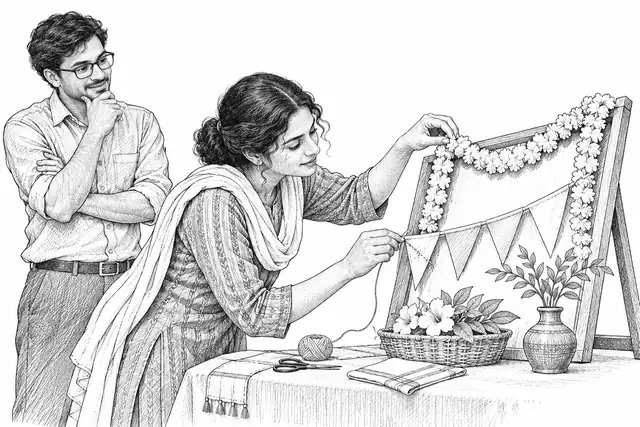
ନିୟମିତ ଲାଗି ନରହିଲେ ଘର ଶୋଭା ପାଏ କି, ବୟସ ବେଳେ ମାଠିବା ନହେଲେ ମନ ଆକର୍ଷିତ ହୁଏ କି—ଦୁଇଟି ପ୍ରଶ୍ନ ଏଠାରେ ଅଛି। ମାଠିବାକୁ ଘଷିମାଜି ପରିଷ୍କାର ବା ପରିମାର୍ଜିତ କରିବାର ବ୍ୟାପକ ଅର୍ଥରେ ରଖାଯାଇଛି; ଠିକ୍ କେଉଁ ଜିନିଷକୁ କିପରି ମାଠିବା କୁହାଯାଇଛି ସ୍ପଷ୍ଟ ନୁହେଁ। ଆମ ପାଠରେ ଆକର୍ଷଣ ସହ ଯତ୍ନ ଓ ପ୍ରୟାସର ସମ୍ପର୍କକୁ ଏହା ଆଗକୁ ଆଣେ।
Literal meaning
Without continual effort, does the house look pleasing? Without polishing in one’s prime, is the heart attracted?
What it means
Both questions place work before appeal: sustained attention for the house, polishing or refinement in one’s prime. Our editorial reading connects a pleasing result with effort rather than assuming it arrives by itself. The second question leaves the thing being polished unstated, so this edition keeps that action broad.
When you might use it
Original imagined example: Someone expects a project to remain inviting without regular attention. A colleague recalls the paired questions about effort and appeal.
Cultural context
The house gives the first question a concrete object. The second turns to attraction while leaving its object implicit. Repeating the negative condition and rhetorical question links the two without identifying a particular grooming or social practice.