DHAGA 535 · proverbial saying
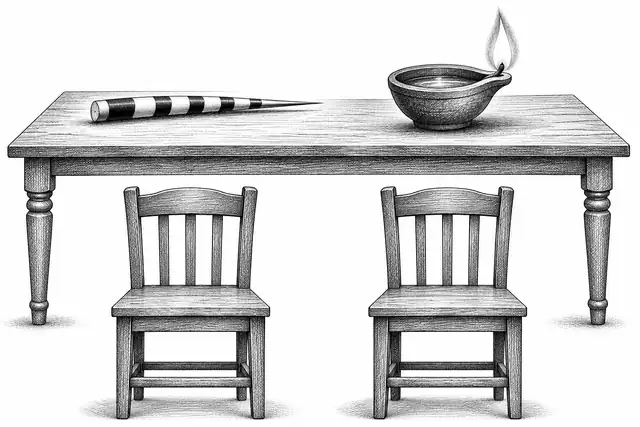
Two grandsons, two opposed images
ପୁଅର ପୁଅ ନାତି
ମାରଇ ଝିଙ୍କର କାତି
ଝିଅର ପୁଅ ନାତି
ସରଗେ ଜାଳଇ ବତୀ।
ମାରଇ ଝିଙ୍କର କାତି
ଝିଅର ପୁଅ ନାତି
ସରଗେ ଜାଳଇ ବତୀ।
ପୁଅର ପୁଅ ଓ ଝିଅର ପୁଅ—ଦୁହେଁ ନାତି, ଅଥଚ ବକ୍ତା ପ୍ରଥମକୁ ଝିଙ୍କକଣ୍ଟାର ଆଘାତ ସହ, ଦ୍ୱିତୀୟକୁ ସରଗରେ ବତୀ ଜାଳିବା ସହ ଯୋଡ଼ିଛନ୍ତି। ଆଘାତ ଓ ଆଲୋକର ଏହି ବିପରୀତ ଚିତ୍ରରେ ବକ୍ତାଙ୍କ ପକ୍ଷପାତ ଫୁଟିଛି। ଏହା ନାତିମାନଙ୍କ ଗୁଣ ବିଷୟରେ ସତ୍ୟ ନିୟମ ନୁହେଁ।
Literal meaning
The son’s son is a grandson: he strikes with a porcupine’s quill. The daughter’s son is a grandson: he lights a lamp in heaven.
What it means
Both children have the same kinship name, yet the speaker gives them opposite images: a hurtful strike and a light in heaven. Read editorially, the verse favours the daughter’s son over the son’s son. That preference belongs to the speaker; the verse does not establish how either kind of grandson actually behaves.
When you might use it
Original imagined example: While discussing old family sayings, a reader quotes this verse to show how the same kinship label can carry sharply unequal expectations, then questions that preference.
Cultural context
The repeated ନାତି makes the contrast especially pointed. The heavenly lamp supplies a favourable image, set against the hurt of a porcupine’s quill.