DHAGA 202 · proverb
Such poverty, yet hot food twice a day
ଏଡ଼େ ମଲାଠେଇଁ ଦିଓଳି ବି ତତଲା ଖିଆ!
ଅଭିଧାନରେ ଏଠାରେ ‘ମଲା’ର ଅର୍ଥ ଅତି ଗରିବ ଅବସ୍ଥା। ଢଗଟି ସେହି ଦୁରବସ୍ଥା ସହ ଦିଓଳି ତତଲା ଖାଇବାକୁ ମୁହାଁମୁହିଁ କରେ। ଦୁଇ ଓଳି ତତଲା ଖାଦ୍ୟର କଥା ଶୁଣି ଅଭାବର ବର୍ଣ୍ଣନାକୁ କଥକ ଥଟ୍ଟା କରୁଥିବା ପରି ଲାଗେ। ଏହି ବ୍ୟଙ୍ଗ ପାଠଟି ଶବ୍ଦର ବିପରୀତ ଚିତ୍ରରୁ କରାଯାଇଛି; ଅଭିଧାନ ଏହାର ପ୍ରୟୋଗ ଅଲଗା କରି ବୁଝାଇନାହିଁ। କାହାର ଗରିବୀ ସତ କି ମିଛ, ଖାଦ୍ୟର ଉଷ୍ଣତା ଦେଖି ତାହା ସ୍ଥିର କରିହେବ ନାହିଁ।
Literal meaning
In such dire poverty, yet eating hot food at both meals!
What it means
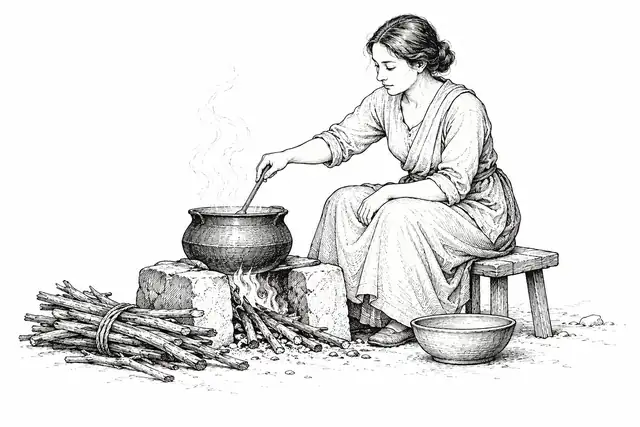
The dictionary places this saying under extreme poverty. The line then sets that condition beside eating hot food at both meals: its surprise lies in the contrast. It can be read as a teasing challenge to a description of hardship, though the dictionary does not supply a separate use gloss. Cooking again costs fuel and work; a literary passage about one cooked-rice meal and one meal of pakhala helps explain the image. That context does not make hot food a reliable measure of anyone’s means.
When you might use it
During an imagined discussion of household expenses, one person complains that nothing is affordable. A companion sees the freshly cooked evening meal and quips, “ଏଡ଼େ ମଲାଠେଇଁ ଦିଓଳି ବି ତତଲା ଖିଆ!” The reply comes back: “A hot meal does not tell you what we have had to go without.” (Original imagined use, not collected testimony.)
Cultural context
Recorded as ଢଗ under ମଲା, noun2, printed Praharaj page6322. Preserve the social sting rather than recasting it as a universal lesson about extravagance. The source establishes wording and the poverty sense; the teasing application is editorial. The separate Rudrakshya passage clarifies meal/fuel language but neither quotes nor explains this proverb. No first-use, popularity or community-wide endorsement is claimed.