
DHAGA 550 · proverbial saying
The cost of speaking openly
କହିବି ନାହିଁ, କହିଲେ ଏ ଘରେ ରହିବି ନାହିଁ,
ଖଣ୍ଡିଆ ପଥୁରି ଧୋଇବି ନାହିଁ,
ତାଟି କିଳା ଭାତ ଖାଇବି ନାହିଁ ।
ଖଣ୍ଡିଆ ପଥୁରି ଧୋଇବି ନାହିଁ,
ତାଟି କିଳା ଭାତ ଖାଇବି ନାହିଁ ।
ମୁହଁ ଖୋଲି କହିଲେ ଏ ଘରେ ନିଜର ସ୍ଥାନ ରହିବ ନାହିଁ ବୋଲି ବକ୍ତା ଚୁପ୍ ରହିବାକୁ କହୁଛନ୍ତି। ତଥାପି ଖଣ୍ଡିଆ ପଥୁରି ଧୋଇବା ଓ ତାଟି କିଳି ଭାତ ଖାଇବାକୁ ମନା କରୁଛନ୍ତି। ଆଶ୍ରୟ ହରାଇବାର ଭୟ ସହ ନିଜ ମର୍ଯ୍ୟାଦା ରକ୍ଷା କରିବାର ଇଚ୍ଛାର ଟଣାଓଟରା ଏଥିରେ ଫୁଟିଛି।
Literal meaning
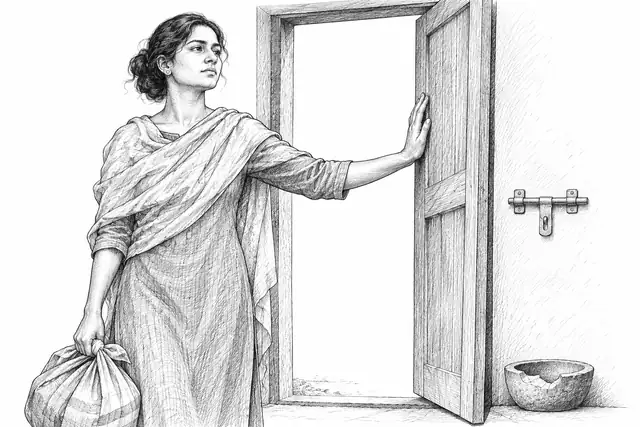
I will not speak; if I do, I will not remain in this house. I will not wash a chipped stone bowl. I will not eat rice behind a fastened door.
What it means
Speaking openly could cost the speaker a place in the household. Yet the voice also refuses the circumstances evoked by washing a chipped stone bowl and eating behind a fastened door. The repeated refusals hold together the need for shelter or support and the wish to retain self-respect.
When you might use it
Original imagined example: Someone depends on a powerful person’s support and hesitates to challenge them, while privately insisting that there are conditions they will not accept.
Cultural context
The passage appears in a discussion of political deception, dependence on leaders and the silence that can accompany flattery. Its household imagery makes the cost of speaking openly concrete.
Recorded variants
କହିବେ ନାଇଁ
କହିଲେ ଏ ଘରେ ରହିବି ନାଇଁ
ତାଟି କିଳା ମାଡ଼ ସହିବି ନାଇଁ
ଖଣ୍ଡିଆ ପଥୁରି ଧୋଇବି ନାଇଁ।Literal (contextual reading of the uploaded opening): Do not say it. If it is said, I will not stay in this house. I will not endure blows behind a fastened door. I will not wash a chipped stone bowl. ଅର୍ଥ: ପ୍ରସଙ୍ଗ ଅନୁସାରେ ଏହି ପାଠରେ କହିବାକୁ ମନା କରିବା ପରେ ଘରେ ନରହିବା, ତାଟି କିଳା ଅବସ୍ଥାରେ ମାଡ଼ ନସହିବା ଓ ଖଣ୍ଡିଆ ପଥୁରି ନଧୋଇବାର ମନା ଅଛି। ପୁନଃପୁନି ମନା କରି ବକ୍ତା ନିଜେ କଣ ସହିବେ ନାହିଁ, ତାହା ଜଣାଉଛନ୍ତି। Explanation: This version moves from speech and staying in the house to refusing blows and washing a damaged bowl. The repeated refusals set limits on what the speaker will endure or do. The verse does not identify a particular household role.