DHAGA 350 · dictionary-labelled saying; source-informed editorial reading
A curse directed at craving
ଥାଇକରି ଯେ ଖାଇମନ କରେ ତା ମୁହଁଟା ପୋଡ଼ୁ
ଖାଇମନ କରିବାର ଅର୍ଥ କୌଣସି ଖାଦ୍ୟ ପାଇଁ ଇଚ୍ଛା କରିବା। ଥାଇ ମଧ୍ୟ ଚାହୁଁଥିବା ବ୍ୟକ୍ତିଙ୍କୁ ଧାଡ଼ିଟି ଅଭିଶାପ ଦିଏ। କଣ ଅଛି ବା ଆବଶ୍ୟକତା ପୂରଣ ହୋଇଛି କି, ଧାଡ଼ିଟି କହେନାହିଁ। ଆମ ପାଠରେ କଥକଙ୍କ ଅଭିଯୋଗ ଓ ଅନ୍ୟର ପରିସ୍ଥିତି ଜାଣିବା ଅଲଗା। ଅଭିଶାପଟି ଖାଦ୍ୟ ବା ଆଚରଣର ପରାମର୍ଶ ନୁହେଁ।
Literal meaning
May the mouth of one who craves while having be burnt.
What it means
The headword defines wanting a particular food. The line curses someone described as having yet craving; it does not specify what is possessed or establish that their needs are met. Our critical reading separates a speaker’s accusation from knowledge of another’s circumstances. Neither the curse nor the accusation becomes advice about how a person should eat.
When you might use it
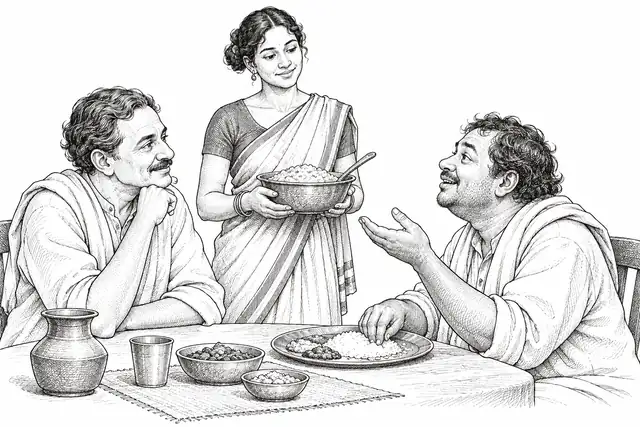
Original imagined example: ଆଉ ଗୋଟିଏ ଖାଦ୍ୟ ମାଗିବାରୁ ଜଣେ ଅତିଥିଙ୍କୁ ଦୋଷ ଦିଆଗଲା। ଘରଲୋକ ପ୍ରଥମେ ତାଙ୍କ କଥା ଶୁଣିବାକୁ କହିଲେ। / An imagined host asks others to hear a guest’s reason before judging a request. This alternative is invented.
Cultural context
The later pregnancy sense does not identify this subject. The following Nilamani Chintatarangini passage is a separate literary illustration, not this saying’s author.