DHAGA 454 · proverbial saying
The golden cage and the remembered hollow
ଘୁଷୁରି କି କାହିଁ ପାଚିଲା କଦଳୀ
ଅନ୍ଧହାତେ ରତ୍ନ ମୁଦି
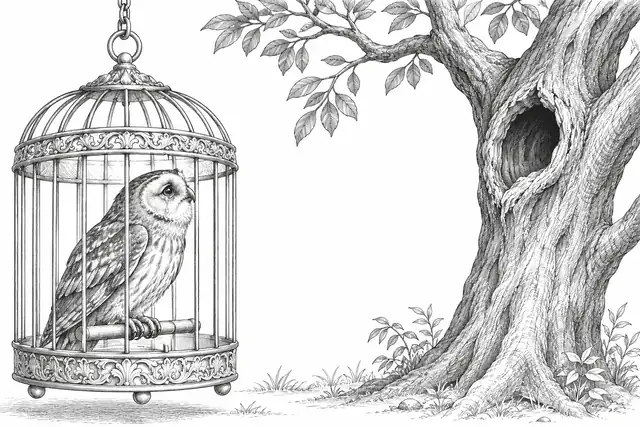
ପେଚା ଚଢ଼େଇ କି ସୁବର୍ଣ୍ଣ ପଞ୍ଜୁରି
କୋରଡ ସୁମରି କାନ୍ଦି।
ଅନ୍ଧହାତେ ରତ୍ନ ମୁଦି
ପେଚା ଚଢ଼େଇ କି ସୁବର୍ଣ୍ଣ ପଞ୍ଜୁରି
କୋରଡ ସୁମରି କାନ୍ଦି।
ପାଚିଲା କଦଳୀ, ରତ୍ନ ମୁଦି ଓ ସୁବର୍ଣ୍ଣ ପଞ୍ଜୁରିକୁ ବକ୍ତା ଏପରି ଉପହାର ଭାବେ ରଖିଛନ୍ତି ଯାହାର ମୂଲ୍ୟ ଗ୍ରହୀତାଙ୍କ ପାଖରେ ମେଳ ଖାଉନାହିଁ। ଶେଷରେ ପେଚା କୋରଡକୁ ମନେପକାଇ କାନ୍ଦୁଛି। ଆମ ପଢ଼ାରେ, ଦାମୀ ଜିନିଷ ଦେଲେ ମଧ୍ୟ ଆଦର ବା ସନ୍ତୋଷ ନମିଳିବା ଏହାର ଭାବ। ଅନ୍ଧ ବ୍ୟକ୍ତିଙ୍କ ଉପମାଟି ବକ୍ତାଙ୍କ ପକ୍ଷପାତପୂର୍ଣ୍ଣ ଚିତ୍ର, ସମ୍ପାଦକୀୟ ନିର୍ଣ୍ଣୟ ନୁହେଁ।
Literal meaning
Why a ripe banana for a pig? A jewel-set ring in a blind person’s hand; a golden cage for an owl—it cries, remembering its tree hollow.
What it means
The speaker links three offerings presented as valuable but misplaced: ripe fruit, a jewelled ring and a golden cage. The last image develops the contrast by giving the owl something it still longs for, its tree hollow. Read editorially, outward value does not guarantee appreciation or contentment. The comparison involving blindness expresses the source’s prejudice, not a limit on what blind people can value.
When you might use it
Original imagined example: Someone receives an expensive replacement for a familiar object but still misses the old one. A reader recalls the golden-cage image to describe why price alone has not brought satisfaction.
Cultural context
The verse moves from food to ornament to shelter. Only the final image gives an explicit response: the owl cries while remembering its hollow. That ending supplies a concrete contrast between what the giver prizes and what the recipient misses.