DHAGA 303 · dictionary-labelled saying; source-informed editorial reading
Burning without fire
ଯାହା ଘରେ ରହେ ଯୁବା ଝିଅ, ବିନା ନିଆଁରେ ପୋଡ଼େ ତା ଦିହ
ବଢ଼ିଲା ଝିଅ ଘରେ ଥିବା ସହିତ ନିଆଁ ବିନା ଦେହ ପୋଡ଼ିବାର ତୀବ୍ର ଛବି ଯୋଡ଼ାଯାଇଛି। ଏଠି ବିବାହ, ଯୌତୁକ, ଦୁଃଖର କାରଣ ବା ପ୍ରକୃତ ଆଘାତ କୁହାଯାଇନାହିଁ। ଆମ ସମାଲୋଚନାମୂଳକ ପାଠ ଏହାକୁ ଝିଅମାନେ ବୋଝ ବୋଲି ରାୟ କରେନାହିଁ। କାହାର ଚିନ୍ତା ଏଠି କୁହାଯାଉଛି ବୋଲି ପଚାରିଲେ ଝିଅଟିର ନିଜ ଦୃଷ୍ଟିଭଙ୍ଗୀ ପାଇଁ ମଧ୍ୟ ଜାଗା ରହେ। ଯାହା ଘରେ ଝିଅ ଅଛି, ତାହାର ଦେହ ପୋଡ଼ୁଛି—ଏହି ହେଉଛି ବାକ୍ୟର ସମ୍ବନ୍ଧ।
Literal meaning
Whoever has a grown daughter at home burns in body without fire.
What it means
The line makes a grown daughter’s presence the occasion for burning without flame. It does not state marriage, dowry, a cause of distress or an actual injury. Our critical response refuses to turn that charged comparison into a verdict that daughters are burdens. Asking whose worry is being voiced leaves the young woman’s own perspective open.
When you might use it
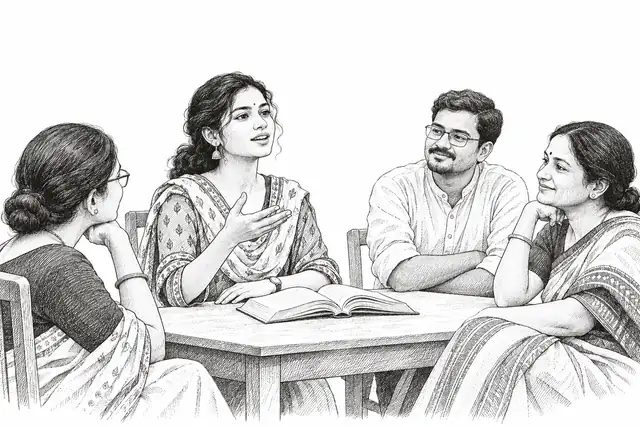
Original imagined example: ପାଠଚକ୍ରରେ ଜଣେ ପଚାରିଲେ, “ଏଠି କାହାର ଚିନ୍ତା?” ଅନ୍ୟଜଣ କହିଲେ, “ଝିଅଟି ନିଜେ କଣ କହିବ, ସେଥି ବି ଶୁଣିବା ଦରକାର।” / Readers ask whose anxiety the line expresses and leave room for the daughter’s voice. Their discussion is invented, not a collected traditional explanation.
Cultural context
The dictionary defines a grown daughter. The pairing ଯାହା…ତା connects the burning body with the person whose home she lives in; it does not identify that person as a father or mother. The fireless burning conveys distress, while its particular cause is unstated.