DHAGA 381 · proverbial saying
Two contrary claims from one mouth
ଏକାତୁଣ୍ଡରେ ଉଆ ଉଷୁନା।
ଏକେ ଲୋକ ଥରେ ଗୋଟିଏ କଥା କହି ପରେ ତାହାର ବିପରୀତ କଥା କହିବା। ଏକା ତୁଣ୍ଡରୁ ଉଆ ଓ ଉଷୁନା ଦୁଇପ୍ରକାର କଥା ବାହାରିବାର ତୁଳନାରେ ଏହି ଅସଙ୍ଗତି ଧରାପଡ଼ିଛି।
Literal meaning
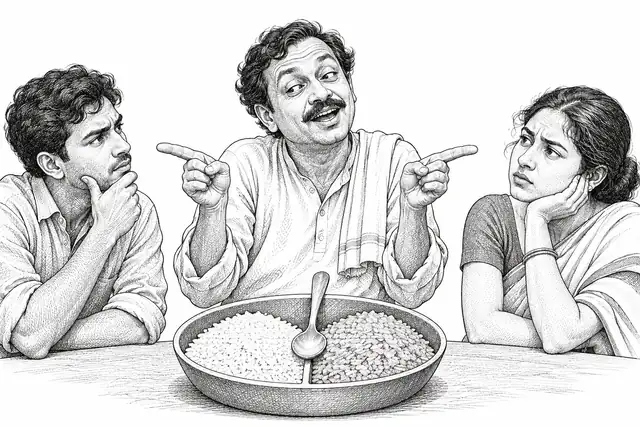
Raw rice and parboiled rice in the same mouth.
What it means
The same mouth offers two contrasting descriptions, “raw” and “parboiled.” The inspected Odia Vasa gloss applies the saying to someone who gives one opinion and later its opposite. The rice contrast makes that inconsistency compact and memorable.
When you might use it
Someone first insists that a plan is workable, then denies ever considering it workable. A listener might use this saying to point out the contradiction. This illustration is newly composed.
Cultural context
ଉଆ is read as ଅରୁଆ, rice not parboiled, in contrast with ଉଷୁନା, parboiled rice. ତୁଣ୍ଡ makes the mouth the common source of both descriptions. The familiar distinction between rice preparations becomes an image for incompatible statements.