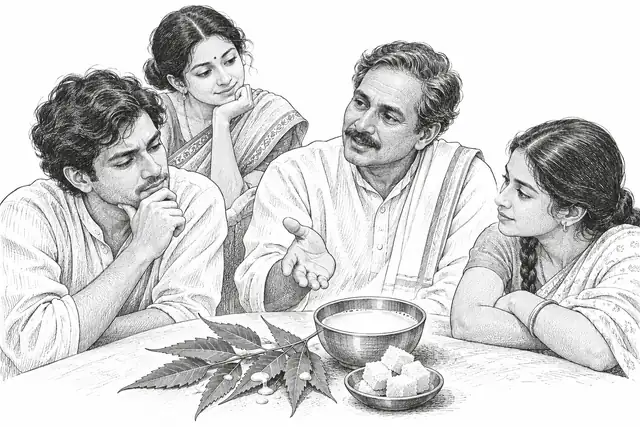
DHAGA 428 · proverbial saying
Can persuasion make someone one’s own?
ଖଣ୍ଡରେ ମୋହିଁଲେ କ୍ଷୀରରେ ଧୋଇଲେ
ଲିମ୍ବ କି ମଧୁର ହୋଇବ
ଯେତେ ପରକାରେ ବୁଝାଇ କହିଲେ
ପର କି ଆପଣା ହୋଇବ।
ଲିମ୍ବ କି ମଧୁର ହୋଇବ
ଯେତେ ପରକାରେ ବୁଝାଇ କହିଲେ
ପର କି ଆପଣା ହୋଇବ।
ଖଣ୍ଡ ଓ କ୍ଷୀରରେ ଲିମ୍ବର ତିକ୍ତତା ବଦଳିବ କି ବୋଲି ପଚାରି, ବକ୍ତା ପର ଲୋକକୁ କଥା କହି ବୁଝାଇ ଆପଣା କରିବା ସମ୍ଭବ କି ନାହିଁ ବୋଲି ସନ୍ଦେହ କରୁଛି। ଏହା ବକ୍ତାର ସନ୍ଦେହ; ପର ଲୋକଙ୍କ ସହ ଆତ୍ମୀୟତା ଗଢ଼ିପାରିବ ନାହିଁ ବୋଲି ସାଧାରଣ ସତ୍ୟ ନୁହେଁ।
Literal meaning
Even if treated with sugar and washed in milk, will neem become sweet? However many ways you explain and persuade, will an outsider become one of your own?
What it means
The speaker compares attempts to sweeten neem with attempts to turn an outsider into someone close through persuasion. Both rhetorical questions lean towards doubt. The verse voices distrust of a hoped-for change in allegiance or belonging; that distrust belongs to its speaker.
When you might use it
In a fictional dispute, someone disappointed by repeated failed attempts at reconciliation quotes the verse. It conveys their distrust at that moment. This illustration is newly composed.
Cultural context
Sugar and milk are placed against neem’s bitter taste, then the verse moves from taste to the contrast between ପର and ଆପଣା. The repeated question ହୋଇବ links the two attempts at transformation.