DHAGA 268 · dictionary-labelled saying; source-informed editorial reading
A fever with pointed timing
ଜର ଅଇଲା ଧାନକୁଟା ବେଳକୁ ଜର ଛାଡ଼ିଲା ଭାତ ଫୁଟା ବେଳକୁ
ଖାଦ୍ୟ ପ୍ରସ୍ତୁତିର ଗୋଟିଏ ପର୍ଯ୍ୟାୟରେ ଜର ଆସେ, ଅନ୍ୟ ପର୍ଯ୍ୟାୟରେ ଛାଡ଼େ—ଦୁଇ ସମୟକୁ ଯୋଡ଼ି କଥାଟି ନଜର ଟାଣେ। ଆମ ପଢ଼ାରେ କଠିନ କାମ ଏଡ଼ାଇବା ପ୍ରତି ଟାହିମିଶା ସନ୍ଦେହ ଶୁଣାଯାଇପାରେ। କେହି ମିଛରେ ଅସୁସ୍ଥ ହୋଇଥିଲେ ବୋଲି ଉତ୍ସ ପ୍ରମାଣ ଦିଏନାହିଁ; ଭାତ ଫୁଟିବା ମଧ୍ୟ ଖାଇବା ନୁହେଁ। ବିରୋଧରେ ଅଭିଯୋଗ ଆସିପାରେ, ତାହା ସତ ହୋଇଯାଏନାହିଁ।
Literal meaning
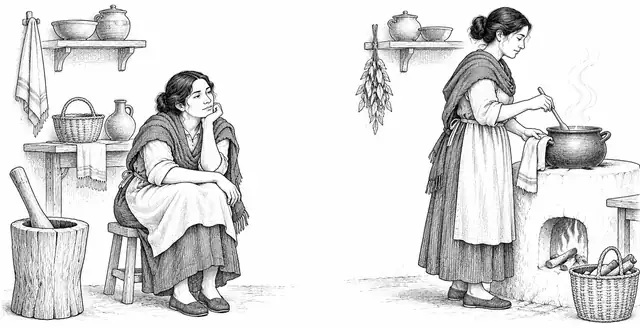
Fever came at paddy-pounding time; fever left at rice-boiling time.
What it means
The paired arrivals make the timing conspicuous: illness accompanies one stage of food preparation and disappears at another. Our reading hears a possible teasing suspicion about avoiding the harder work. The source does not prove that anyone pretended to be ill, and boiling rice is not yet eating it. The contrast can carry an accusation without making that accusation true.
When you might use it
Original imagined example: In a reading discussion, someone quotes the two timings and laughs at the apparent convenience. Another points out that illness can change and asks what the line actually establishes. This imagined exchange separates a joke from evidence about a sick person.
Cultural context
The dictionary defines fever abatement. No medical explanation, diagnosis, work instruction or documented household incident is established; the teasing inference is editorial.