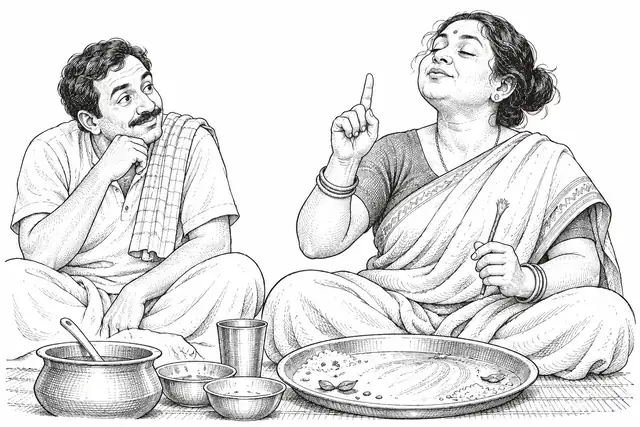
DHAGA 359 · proverbial saying
A fast after a feast
ଅଖାଇ କରିଚି ଓଷା
ଡୋଲିକ ଚାଉଳ ଓଳିକେ ଖାଇଲା
ଦାନ୍ତ ଅଛି ଦରଘଷା।
ଡୋଲିକ ଚାଉଳ ଓଳିକେ ଖାଇଲା
ଦାନ୍ତ ଅଛି ଦରଘଷା।
ପ୍ରକୃତ କାମକୁ ଲୁଚାଇ ଅନ୍ୟମାନଙ୍କ ଆଗରେ ସଂଯମର ଦେଖାଣି କରିବାକୁ ଏହି ଢଗରେ ବ୍ୟଙ୍ଗ କରାଯାଇଛି।
Literal meaning
Akhai is observing a fast: she ate a dol-full of rice in one sitting, yet her teeth are still only half-brushed.
What it means
The comic contradiction is between a claim of fasting and the large meal already eaten. The closing image keeps up the appearance of a morning before food, although the meal has happened. Read this as a criticism of pretence: the declared discipline does not agree with the action. The journal’s gloss supports that general reading; the connection between tooth-cleaning and the pretended sequence of events is an editorial interpretation.
When you might use it
Someone announces a day of restraint after quietly taking the largest share. A listener may recall this saying to question the performance of self-denial. This is a newly composed example, not a recorded conversation.
Cultural context
The verse uses food, an observance called ଓଷା, and tooth-cleaning to make its contrast visible. Its female figure is part of this wording, not a claim about women or religious observance generally. ଡୋଲିକ is retained as a traditional quantity expression; no modern weight or volume has been established.