DHAGA 219 · proverbial saying
Leaving care at the gate
ବୁଢ଼ା ବଳଦକୁ ଜୂଆଁଣିଆ ଘାସ ଖାଉ କି ନ ଖାଉ ମେଲି ଦେଇ ଆସ
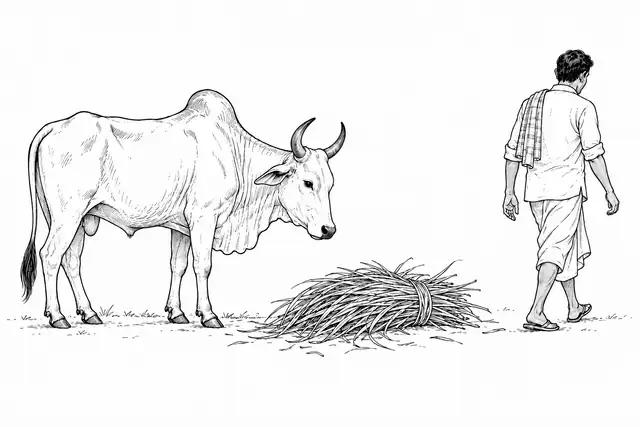
ବୁଢ଼ା ବଳଦକୁ ମୋଟା କରଡ଼ା ଘାସ ଦେଇଦେଲେ, ହେଲେ ସେ ଖାଇପାରିଲା କି ନାହିଁ ସେଥିରେ ଆଉ ଧ୍ୟାନ ନାହିଁ। ମେଲି ଦେଇ ଚାଲିଆସିବାର ଶେଷକଥାରେ ଏହି ଅବହେଳା ସ୍ପଷ୍ଟ ହୁଏ। ଅଭିଧାନ ଘାସକୁ ମୋଟା ଓ କରଡ଼ା ବୋଲି କହିଛି; ଅଲଗା ଲକ୍ଷଣାର୍ଥ ଦେଇନାହିଁ। ଆମ ପାଠରେ ଏହା କେବଳ ଦାୟିତ୍ୱ ସାରିଦେବା ଭଳି ଯତ୍ନର ଚିତ୍ର—ଯାହା ପାଇଁ ଦିଆଗଲା, ତାହାର କାମରେ ଲାଗିଲା କି ନାହିଁ ଦେଖାଗଲା ନାହିଁ। ଏହି ଅବହେଳାକୁ ପ୍ରଶ୍ନ କରି କଥାଟି ବ୍ୟବହାର କରିହୁଏ, ତାହାର ଅନୁକରଣ କରିବା ପାଇଁ ନୁହେଁ।
Literal meaning
Give the old ox coarse juannia grass; whether it eats or not, let it loose and come away.
What it means
The food is offered, but whether the old animal can use it is treated as no concern of the giver. The dismissive ending is the revealing part: doing something that resembles care becomes an excuse to stop caring about the outcome. The source defines the grass as coarse and tough; it does not give a separate figurative gloss. Our reading hears a picture of perfunctory attention, especially when someone’s needs have changed. Quoting it critically can draw attention to neglect rather than recommend the conduct it describes.
When you might use it
Original imagined example: A club sends a complicated online form to a member who has already said they cannot use that system. When someone says “We sent it, so our job is done,” another member quotes the saying to challenge that indifference and offers to help complete the form.
Cultural context
The analogy is read critically, not as animal-care advice or an assertion that older people have less value. The source spelling ଜୂଆଁଣିଆ in the quoted line is retained although the headword has ଜୁଆଁଣିଆ. No species or agricultural history is inferred.