DHAGA 475 · proverbial saying
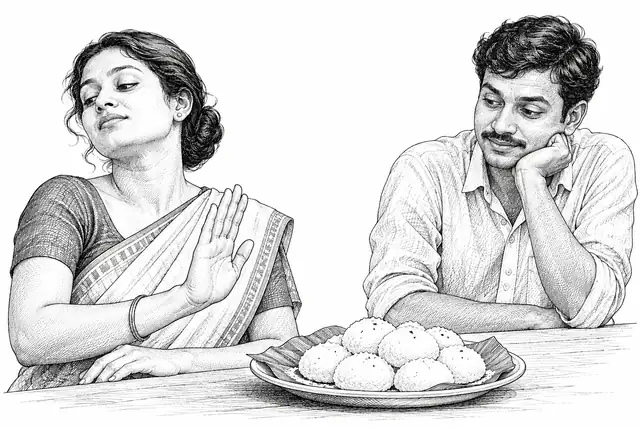
Plenty of dumplings, an untouched mouth
ଛ’ ଅଡା ଚାଉଳ ଗଇଁଠା
ପାଟି ହୋଇ ନାହିଁ ଅଇଁଠା।
ପାଟି ହୋଇ ନାହିଁ ଅଇଁଠା।
ଛଅ ଅଡା ଚାଉଳର ଗଇଁଠା, ଅଥଚ ପାଟି ଅଇଁଠା ହୋଇନାହିଁ—ଦୁଇ ଧାଡ଼ିରେ ଏହି ଅସଙ୍ଗତି ରହିଛି। ଅଡା ଏକ ଶସ୍ୟମାପ। ଆମ ପଢ଼ାରେ, ଏତେ ଖାଦ୍ୟକୁ ମଧ୍ୟ କିଛି ଖାଇବାରେ ଗଣନା ନକରିବାର ଢଙ୍ଗକୁ କଥାଟି ଥଟ୍ଟା କରିପାରେ। କିଏ କେତେ ଖାଇଲା, ପାଠ ତାହା ସ୍ପଷ୍ଟ କହୁନାହିଁ।
Literal meaning
Dumplings from six ada measures of rice; the mouth has not even been soiled by eating.
What it means
A measured quantity of rice dumplings stands beside a mouth said to be untouched by eating. One editorial reading hears a teasing refusal to count plenty as even a taste. The verse leaves the eating itself unstated, so the contrast can be appreciated without inventing a meal or judging anyone’s actual hunger.
When you might use it
Original imagined example for this reading: Someone receives a substantial share of something and dismisses it as practically nothing. A listener recalls the dumplings that supposedly have not even touched the mouth.
Cultural context
ଗଇଁଠା and ଅଇଁଠା rhyme, connecting the food with the mouth’s claimed condition. The measure in the first line gives weight to what the second line appears to dismiss.