
DHAGA 34 · proverbial saying
Pride that boils over
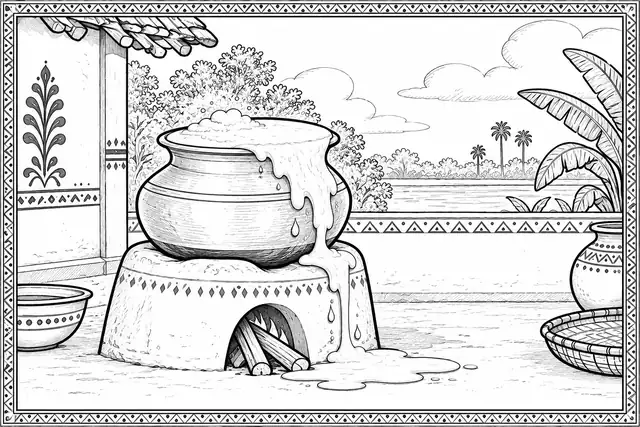
କ୍ଷୀର ଉତୁରିଲେ ଚୁଲିକୁ,
ମଣିଷ ଉତୁରିଲେ ଗାତକୁ...!!!
ମଣିଷ ଉତୁରିଲେ ଗାତକୁ...!!!
ଦୁଧ ଉତୁରିବାର ଚିତ୍ର ସହ ଅତି ଗର୍ବର ପରିଣାମକୁ ମେଳାଯାଇଛି। ନିଜକୁ ବହୁତ ବଡ଼ ଭାବି ସଂଯମ ହରାଇଲେ ଅସୁବିଧା ହୋଇପାରେ—ଏହା ହିଁ ସତର୍କତା। ଆତ୍ମବିଶ୍ୱାସ ଓ ଅହଂକାର ମଧ୍ୟରେ ତଫାତ ଅଛି; ସଫଳତାରେ ଖୁସି ହେବାକୁ କଥାଟି ମନା କରେନାହିଁ।
Literal meaning
When milk boils over, it spills onto the hearth; when a person goes too far, into the pit.
What it means
The first line supplies an everyday overflow; the second turns it into a warning about arrogance. The source explicitly frames the saying as a response to excessive pride. Its sharp downward ending suggests that losing restraint can bring a fall.
When you might use it
A successful team member begins dismissing everyone else’s advice, and a colleague warns against letting success become arrogance. (New editorial example, not a collected quotation.)
Cultural context
The comparison is between two kinds of overstepping. It is a figurative warning, not a prediction that every proud person will suffer a particular fate. The source’s digital punctuation is preserved.
Recorded variants
ବାଉଁଶ ଫୁଲରେ ମରେ
ମଣିଷ ଫୁଲିଲେ ମରେ।Literal: Bamboo dies through flowering; a person dies when puffed up. ଅର୍ଥ: ବାଉଁଶ ଫୁଲ ଧରିଲେ ମରେ, ମଣିଷ ଗର୍ବରେ ଫୁଲିଲେ ମରେ—ପଙ୍କ୍ତିର ବକ୍ତା ଏହି ତୁଳନା କରୁଛନ୍ତି। ଫୁଲ ଓ ଫୁଲିବାର ଶବ୍ଦଖେଳରେ ଅହଂକାରର କ୍ଷତିକୁ ତୀବ୍ର କରି କୁହାଯାଇଛି। ମଣିଷର ଫୁଲିବାକୁ ଏଠାରେ ଗର୍ବ ଭାବେ ପଢ଼ାଯାଇଛି; ଏହା ଦେହର ରୋଗ ବିଷୟରେ ବ୍ୟାଖ୍ୟା ନୁହେଁ। Explanation: The sound of flowering passes into being puffed up, turning a plant image into a warning about pride. Both lines end in death, giving the comparison its severity. Our editorial reading takes that human endpoint as the saying’s forceful image of ruin through arrogance. Bamboo statement belongs to the proverbial image, without a universal biological claim.