DHAGA 326 · dictionary-labelled saying; source-informed editorial reading
Wrongdoing meets magnanimity
ଚୋରି କରିବ, ମହତ ଲୋକର ହାବୁଡ଼େ ପଡ଼ିବ
ଧାଡ଼ିଟି ଚୋରି ଓ ଜଣେ ଉଦାରମନା ବ୍ୟକ୍ତିଙ୍କ ସହ ଭେଟକୁ ପାଖାପାଖି ରଖେ। ଅଭିଧାନର ପ୍ରଥମ ଅର୍ଥରେ ଉଦାରତା ଅଛି, କେବଳ ଧନ ବା ପଦମର୍ଯ୍ୟାଦା ନୁହେଁ। ଆମ ପାଠ କାମଟି ଓ ଭେଟୁଥିବା ବ୍ୟକ୍ତିଙ୍କ ଗୁଣ ମଧ୍ୟର ଟାଣକୁ ଦେଖେ। ଭେଟର ଫଳ ଅକୁହା ରହେ—କ୍ଷମା ବା ଚରିତ୍ର ପରିବର୍ତ୍ତନର ପ୍ରତିଶ୍ରୁତି ନାହିଁ। ଏହାକୁ ଚୋରି କରିବାର ପରାମର୍ଶ ଭାବେ ନିଆଯାଉନାହିଁ।
Literal meaning
You will steal; you will encounter a magnanimous person.
What it means
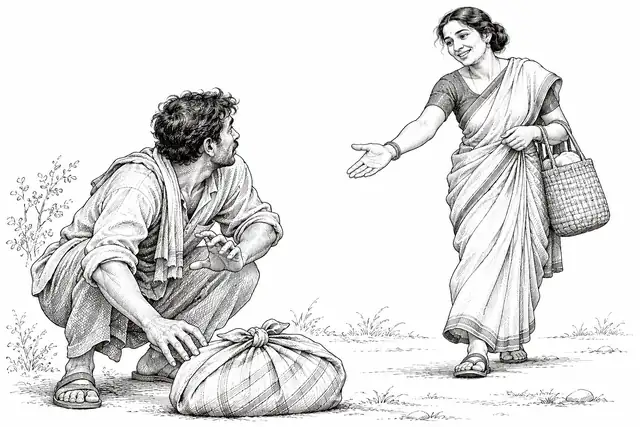
The line brings theft and an encounter with a magnanimous person together. The first dictionary sense supplies generosity of character, not merely wealth or rank. Our reading attends to the tension between the act and the person encountered. It leaves the encounter’s result open: the source promises neither pardon nor reform and is not a recommendation to steal.
When you might use it
Original imagined example: ପାଠଚକ୍ରରେ ଜଣେ ଶେଷରେ କ୍ଷମା ମିଳିବ ବୋଲି ଭାବିଲେ। ଅନ୍ୟଜଣ ମନେ ପକାଇଲେ, ଧାଡ଼ିରେ ଫଳ କୁହାଯାଇନାହିଁ। / Readers distinguish their expected ending from what is actually stated. This discussion is invented.
Cultural context
The quotation follows magnanimous sense1, not the later saintly sense3. No historical incident, immunity, compulsory mercy or fixed traditional moral is established.