DHAGA 160 · Didactic verse
Contentment with what comes
ଆହାରେ ଭଲ ମନ୍ଦ ନାହିଁ,
ଯେ ସ୍ଥାନେ ଯେବଣ ମିଳଇ ।
ଯେ ସ୍ଥାନେ ଯେବଣ ମିଳଇ ।
ଯେଉଁଠି ଯାହା ମିଳେ, ତାହାକୁ ସନ୍ତୋଷରେ ଗ୍ରହଣ କରିବାର କଥା ଏହି ପଦରେ ଅଛି। ଜଗନ୍ନାଥ ଦାସଙ୍କ ଭାଗବତର ଏକ ସମ୍ପର୍କିତ ପାଠରେ ଅବଧୂତ ଯଦୁ ରାଜାଙ୍କୁ ନିଜର ସମଭାବ ଓ ଅଜଗରଠାରୁ ଶିଖିଥିବା ଧର୍ମ ବିଷୟରେ କହନ୍ତି। ସେଠାରେ ଖାଦ୍ୟ ଅଳ୍ପ ବା ବହୁତ ହେଲେ ବି ସନ୍ତୋଷ ରହେ। ଦୈନନ୍ଦିନ କଥାରେ ପଦଟି ଅନାବଶ୍ୟକ ଖୁଣ ନ ଧରି, ମିଳିଥିବା ଜିନିଷକୁ ନେଇ ଚଳିବାର ପରାମର୍ଶ ହୋଇପାରେ।
Literal meaning
In food there is no good or bad: whatever is available in a place.
What it means
The verse sets aside distinctions between preferred and less preferred food: one accepts what is available. A related passage in Jagannath Das’s Odia Bhagabata places this thought in the Avadhuta’s account to King Yadu of equanimity and the python as a teacher. Read in everyday conversation, it can counsel contentment instead of constant complaint. That everyday application is an interpretation, not an account of the saying’s first use.
When you might use it
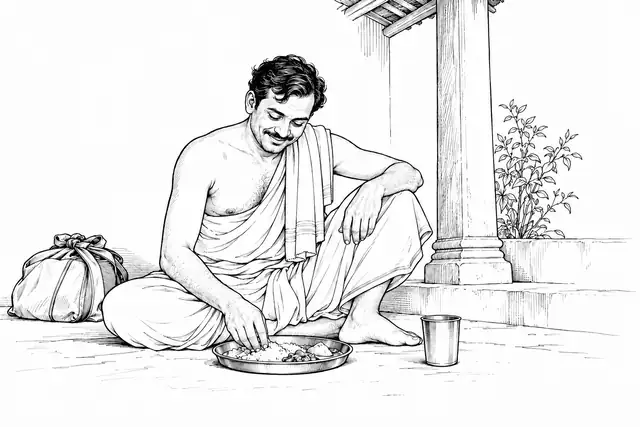
On a visit, a guest welcomes a simple meal instead of complaining that a favourite dish is missing. (Original imagined occasion.)
Cultural context
The related Bhagabata text is an ascetic teaching about contentment. Its chapter 9, verse 5 reads ଯେମନ୍ତ where the selected Incubator witness reads ଯେବଣ; keep both readings distinct. Neither this comparison nor the modern compilation establishes a first coinage or a direction of borrowing.