
DHAGA 461 · proverbial saying
The son follows the household’s role
ଚାଟ ଘର ପୁଅ ଚାଟ
ଭାଟ ଘର ପୁଅ ଭାଟ।
ଭାଟ ଘର ପୁଅ ଭାଟ।
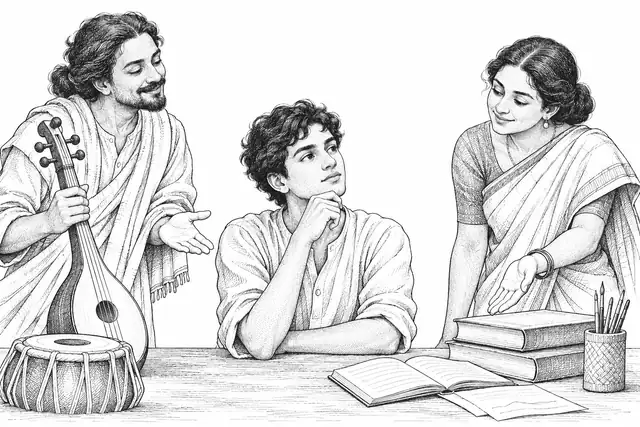
ଚାଟ ଘରର ପୁଅ ଚାଟ, ଭାଟ ଘରର ପୁଅ ଭାଟ—କଥାଟି ପରିବାରର ପରିଚୟକୁ ପରପିଢ଼ିରେ ଦେଖୁଛି। ଏଠାରେ ଚାଟର ଶବ୍ଦାର୍ଥ ବିଦ୍ୟାର୍ଥୀ, ଭାଟର ଅର୍ଥ ପ୍ରଶସ୍ତି ଗାୟକ। ଆମ ପଢ଼ାରେ, ଏହା ପରିବାରର ଶିକ୍ଷା ବା କାମକୁ ପିଲାଙ୍କ ସହ ଯୋଡ଼ିବାର ଧାରଣା; ଜନ୍ମ ମାତ୍ରରୁ ପ୍ରତିଭା ନିର୍ଦ୍ଧାରିତ ହୁଏ ବୋଲି ପ୍ରମାଣ ନୁହେଁ।
Literal meaning
The son of a learner’s household is a learner; the son of a bard’s household is a bard.
What it means
Each line repeats the household’s role in its son. The formula expresses an expectation of continuity between generations. The inspected modern article quotes it while questioning the use of lineage to claim superior ability or inherit positions; that context shows why the expectation deserves scrutiny.
When you might use it
Original imagined example: People assume that a child will follow the family’s occupation before asking about the child’s interests. A reader quotes the saying to identify that expectation and then questions it.
Cultural context
The parallel ଘର ପୁଅ construction carries family identity from one generation to the next. ଚାଟ refers to a learner, while ଭାଟ names a bard. The rhyme makes the repeated social pattern memorable.
Recorded variants
ନାଗର ପୁଅ ନାଗ
ବାଘର ପୁଅ ବାଘ।Literal: A cobra’s son is a cobra; a tiger’s son is a tiger. ଅର୍ଥ: ନାଗର ପୁଅ ନାଗ, ବାଘର ପୁଅ ବାଘ—ଦୁଇ ଧାଡ଼ିରେ ପୂର୍ବ ପିଢ଼ିର ପରିଚୟ ପର ପିଢ଼ିରେ ପୁଣି ଦେଖାଯାଉଛି। ଚାଟ ଘର ପୁଅ ଚାଟ, ଭାଟ ଘର ପୁଅ ଭାଟ ରୂପଟି ପରି ଏହା ପିଢ଼ିରୁ ପିଢ଼ିକୁ ସାଦୃଶ୍ୟର ଆଶା ପ୍ରକାଶ କରେ। ମଣିଷର ଗୁଣ କିମ୍ବା ଯୋଗ୍ୟତା ବଂଶରୁ ନିଶ୍ଚିତ ହୁଏ ବୋଲି ଏହାକୁ ପ୍ରମାଣ ଧରାଯାଏନାହିଁ। Explanation: The two lines repeat the parent’s identity in the son, using the same parallel formula as the learner-and-bard household version. We group it editorially as an animal-image variant of that continuity theme. The wording leaves open whether a particular speaker admires or fears the resemblance; it does not establish inherited human character or ability.