DHAGA 435 · proverbial saying
Poverty made a pretext for mockery
ଗରିବ ମାଇପ ସବୁରି ଶାଳୀ।
ଗରିବ ଲୋକର ସ୍ତ୍ରୀକୁ ସମସ୍ତେ ନିଜ ଶାଳୀ ବୋଲି ଧରିନେବାର ରୂପକ ଏଠାରେ ଅଛି। ଉତ୍ସର ବ୍ୟାଖ୍ୟା ଅନୁସାରେ ଦାରିଦ୍ର୍ୟର ସୁଯୋଗ ନେଇ ଲୋକେ ଥଟ୍ଟା ପରିହାସ କରନ୍ତି। ଆମ ପଢ଼ାରେ ଏହା ଅସମ୍ମାନ ଓ ଅନଧିକାର ଘନିଷ୍ଠତାର ଛବି; ଦାରିଦ୍ର୍ୟ କାହାର ସମ୍ମାନ କମାଏ ନାହିଁ।
Literal meaning
A poor man’s wife is everyone’s sister-in-law (wife’s sister).
What it means
The saying makes an impossible family claim: everyone treats the poor man’s wife as their own sister-in-law. The inspected gloss explains this as taking advantage of poverty to mock people. Our reading focuses on the disrespect in that claimed familiarity, rather than treating poverty as a reason anyone deserves it.
When you might use it
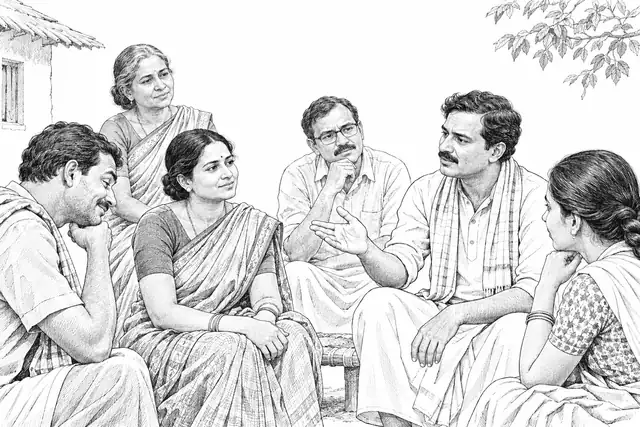
Original imagined example: A discussion turns to people who ridicule a neighbour because the household has little money. Someone cites the proverb as a sharp image of that disrespect and challenges the mockery.
Cultural context
The kinship word ଶାଳୀ supplies a claim of personal familiarity, while ସବୁରି expands that claim to everyone. The source gloss links this intrusion to poverty. The woman in the image carries the insult directed at a household’s vulnerable position.