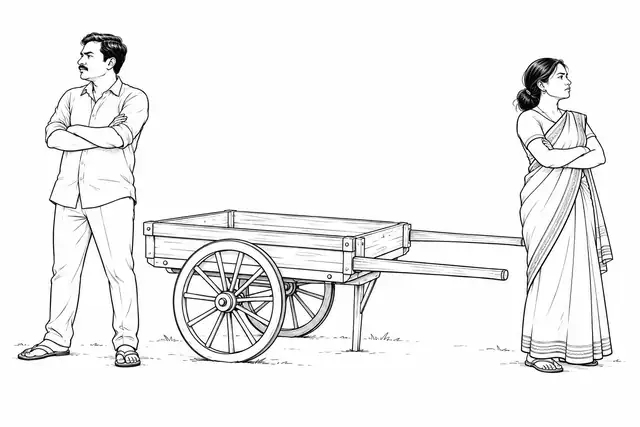
DHAGA 44 · proverbial saying
Resentment that harms oneself
ଘଇତା ପଛେ ମରୁ କିନ୍ତୁ ସଉତୁଣି ରାଣ୍ଡ ହେଉ!.
ଅନ୍ୟ ଜଣଙ୍କ କ୍ଷତି ହେଉ ବୋଲି ଚାହିଁ ନିଜର ସେହି କ୍ଷତିକୁ ମଧ୍ୟ ଭୁଲିଯିବାର ଚିତ୍ର ଏହା। ରାଗ ବା ଈର୍ଷା ବିଚାରକୁ ଏତେ ଢାଙ୍କିଦିଏ ଯେ ନିଜ ହାନି ବି ଛୋଟ ଲାଗେ। ଘରୋଇ ସମ୍ପର୍କର ଏହି କଟୁ ଉପମାକୁ ସମସ୍ତ ନାରୀ ବା କୌଣସି ସମ୍ପର୍କର ସ୍ୱଭାବ ବୋଲି ନେବା ଉଚିତ ନୁହେଁ।
Literal meaning
Let my husband die, so long as the co-wife becomes a widow.
What it means
Spite becomes so strong that the speaker accepts a shared loss merely to hurt a rival. The deliberately harsh domestic scene exposes the cost of that desire. It is a criticism of destructive resentment, not a claim that women or co-wives naturally behave this way.
When you might use it
Two groups refuse a shared resource because each would rather lose access than let the other benefit. (New editorial example, not a collected quotation.)
Cultural context
The source preserves a coarse term for widow and a co-wife rivalry image. Those gendered insults are part of the documented wording, not language the explanation endorses or a history of any particular household. The figurative explanation is an editorial interpretation, not a separately verified traditional gloss.