DHAGA 317 · dictionary-labelled saying; source-informed editorial reading
Someone else wears the blame
ଗାଁଆଁବାଲା ପଣସ ଖାଇଲେ, ଭଣ୍ଡାରୀ ମୁଣ୍ଡରେ ଅଠା ବୋଳିଲେ
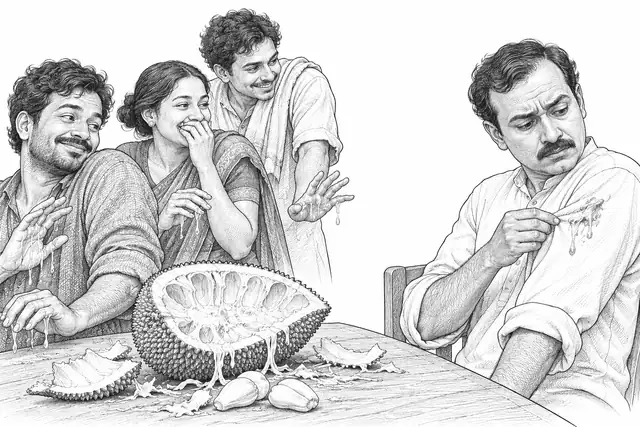
ପଣସ ଖାଇଥିବା ଲୋକ ଓ ମୁଣ୍ଡରେ ଅଠା ବୋଳାଯାଇଥିବା ବ୍ୟକ୍ତି ଅଲଗା। ଶବ୍ଦର ଅର୍ଥରେ କାହା ଉପରେ ଦୋଷ ବା କଳଙ୍କ ଦେବା କଥା ଅଛି। ଆମ ପାଠରେ ଦାଗଟି ପ୍ରକୃତ କାର୍ଯ୍ୟକାରୀଙ୍କ ବଦଳରେ ଅନ୍ୟଜଣଙ୍କୁ ଦୋଷୀ ଦେଖାଉଛି। ଏହା ଅଭିଯୋଗକୁ ପ୍ରଶ୍ନ କରିବାର ପାଠ, କୌଣସି ସମୁଦାୟର ଆଚରଣର ପ୍ରମାଣ ନୁହେଁ।
Literal meaning
The villagers ate the jackfruit; they smeared its sticky substance on Bhandari’s head.
What it means
The eaters and the person marked by the sticky residue are different. The headword explicitly explains laying blame or stigma on someone. Our reading follows that transfer: the visible mark is made to point away from those who acted. It is a way to question an accusation, not evidence about any community’s conduct.
When you might use it
Original imagined example: ଦଳର ଭୁଲ ହିସାବ ପାଇଁ କେବଳ ଶେଷରେ ଖାତା ଧରିଥିବା ସଦସ୍ୟଙ୍କୁ ଦୋଷ ଦିଆଗଲା। ସେମାନେ ପୁରୁଣା ଲେଖା ମଧ୍ୟ ଯାଞ୍ଚ କଲେ। / A team checks earlier entries before blaming the person currently holding its ledger. This scene is invented.
Cultural context
Bhandari retains the source’s ଭଣ୍ଡାରୀ; this head supplies no occupational or caste identification.