DHAGA 183 · Instructive verse in a collection of sayings
Quiet persistence against a rush
ଧୀର ସ୍ଥିର ନୋହି ଉତ୍ତେଜିତ ହେଲେ
କାର୍ଯ୍ୟ କେବେ ସିଦ୍ଧ ନୁହେଁ ।
ଧୀରପାଣି ସିନା ପଥର କାଟଇ
ସ୍ରୋତ ତହିଁ ବ୍ୟର୍ଥ ହୁଏ ॥
କାର୍ଯ୍ୟ କେବେ ସିଦ୍ଧ ନୁହେଁ ।
ଧୀରପାଣି ସିନା ପଥର କାଟଇ
ସ୍ରୋତ ତହିଁ ବ୍ୟର୍ଥ ହୁଏ ॥
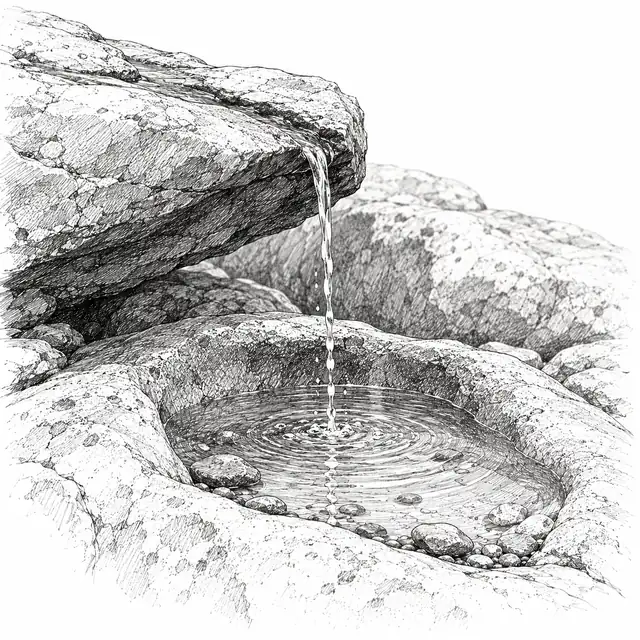
ପଥର କାଟୁଥିବା ଧୀର ପାଣିର ଛବି ଦେଇ ପଦଟି ସ୍ଥିର ମନରେ କାମ କରିବାକୁ କହେ। ହଠାତ୍ ଉତ୍ତେଜନାର ଜୋର ଦେଖାଯାଏ, କିନ୍ତୁ ଧୈର୍ଯ୍ୟର କାମ ଚାଲିଥାଏ। ଏଠାରେ ପାଣି ଓ ସ୍ରୋତର ତୁଳନା ମନର ଅବସ୍ଥାକୁ ବୁଝାଏ; ପ୍ରକୃତିର ସବୁ ଘଟଣା ପାଇଁ ନିୟମ ବାନ୍ଧେନାହିଁ।
Literal meaning
If one becomes agitated instead of steady, work never succeeds. Slow water cuts stone; the rushing current fails there.
What it means
The verse gives patient work the quieter but stronger image. Water that keeps returning to the stone stands against a rush of agitation. Its supplied gloss recommends thinking and acting steadily instead of becoming angry. The absolute contrast belongs to the verse’s exhortation; it is not a scientific claim that fast water cannot erode stone.
When you might use it
Two people keep restarting a repair in irritation. A companion suggests checking one connection at a time and recalls the quiet water working on stone. (Original imagined example.)
Cultural context
This four-line exhortation appears in the collection of traditional sayings, with a supplied gloss. No named poet, composition date, tune or independent evidence of proverbial circulation is established in this pass. Its four-line form is retained, not silently shortened to a slogan.