DHAGA 365 · proverbial saying
A spouse’s teasing complaint
ଅତି ସୁନ୍ଦରୀ ଲୋ ଚହଟ ଗୋରୀ
ଆଗେ ତୋତେ ହେଲି ବିଭା
ଏବେ ଯହୁଁ ଧନ ବୟସ ସରିଲା
ଦାଣ୍ଡେ ବସାଉଛୁ ସଭା।
ଆଗେ ତୋତେ ହେଲି ବିଭା
ଏବେ ଯହୁଁ ଧନ ବୟସ ସରିଲା
ଦାଣ୍ଡେ ବସାଉଛୁ ସଭା।
ପତ୍ନୀର ପୂର୍ବ ରୂପକୁ ମନେ ପକାଇ ସ୍ୱାମୀ ଏବେ ସେ ଦାଣ୍ଡରେ ସଭା ବସାଉଥିବା ନେଇ ଆକ୍ଷେପ କରୁଛି। ଏହାକୁ ଏଠାରେ ସେହି କଥକର ଦାମ୍ପତ୍ୟ ଥଟ୍ଟା ବା ଅଭିଯୋଗ ଭାବେ ପଢ଼ାଯାଇଛି।
Literal meaning
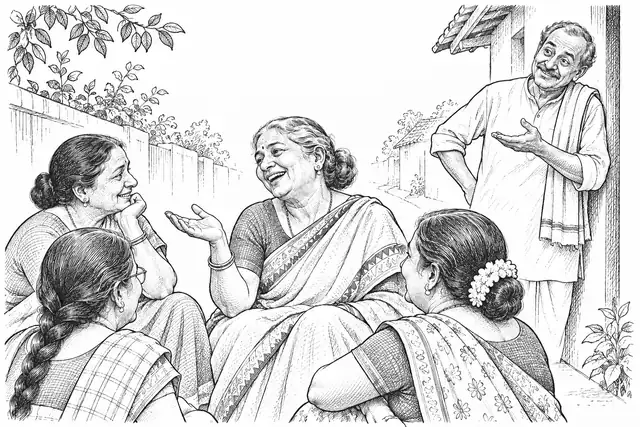
O very beautiful, radiantly fair woman, I married you in earlier days. Now, dear, when youth has passed, you hold gatherings out in the street.
What it means
A spouse recalls marrying the woman he describes as beautiful and fair, then complains that she now gathers people in the street. The change from praise to reproach gives the verse its teasing edge. This is an editorial reading of the speaker’s complaint; the lines do not tell us what those gatherings discuss.
When you might use it
In discussing a fictional couple’s dialogue, these lines could illustrate how an affectionate address can carry a complaint about changes over time. This is a newly composed reading example, not a documented customary use.
Cultural context
The speaker links his wife’s appearance and age with his judgment of her public sociability. The complexion praise and gendered reproach belong to that source voice. They are not this edition’s standards for women’s worth or conduct. ଧନ is an affectionate address, “dear,” within the speaker’s direct appeal to his wife.